Examining the Importance of Metal Foundries in Industrial Manufacturing
Metal foundries are fundamental in the domain of manufacturing. They transform base materials into crucial components that support multiple industries, from the automotive sector to aerospace. Sophisticated casting processes enable the creation of robust components that greatly enhance performance and safety. Yet, as these facilities embrace innovative technologies and encounter sustainability challenges, the outlook for these foundries is under scrutiny. The future of this essential industry is deserving of careful thought.
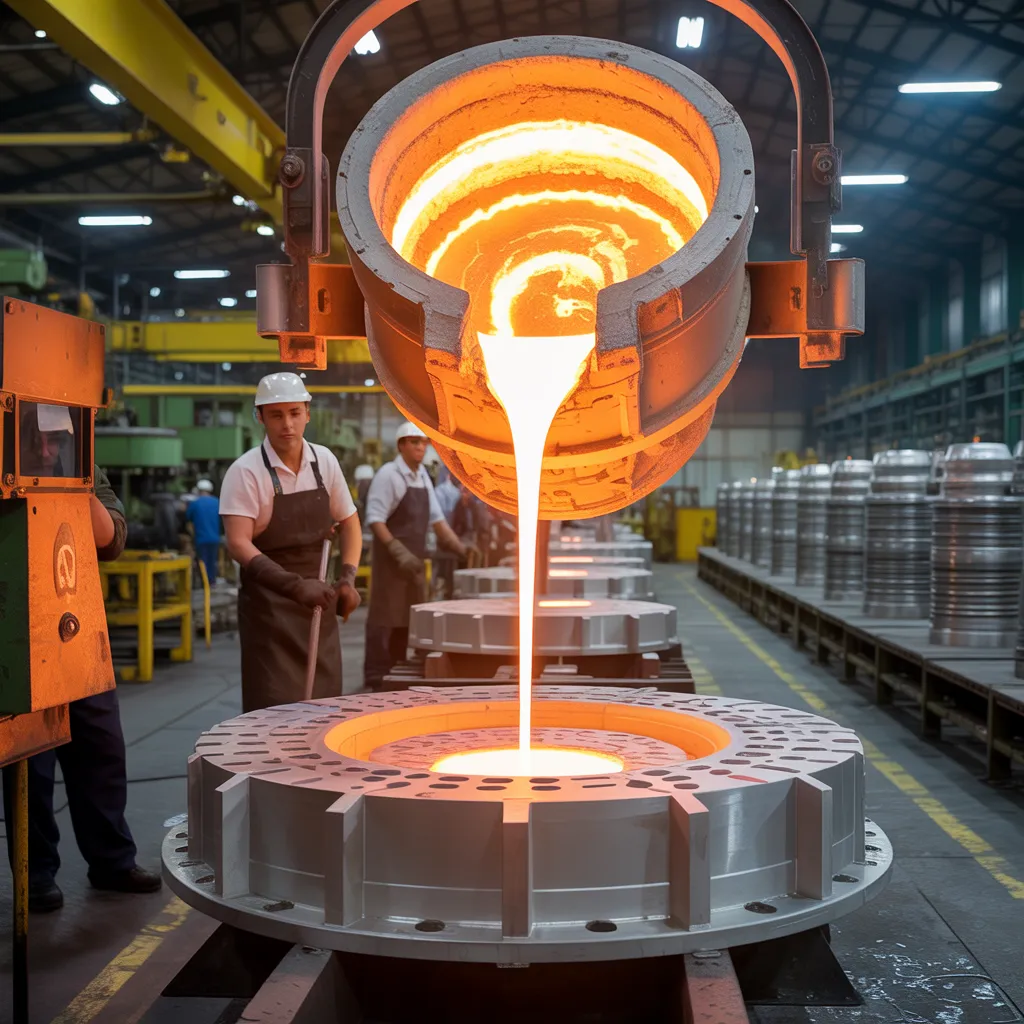
Understanding the Metal Casting Process
The metal casting procedure converts liquid metal into solid shapes via numerous specialized techniques. The procedure starts with the melting of metal, most commonly inside a furnace, where it reaches a temperature suitable for casting. After melting, the liquid metal is introduced into a mold, that establishes the shape of the end product. Numerous techniques including die casting, sand casting, and investment casting are utilized, each delivering specific advantages in precision and overall complexity.
Heat dissipation takes place as the molten material sets within the mold, allowing it to take on the intended form. Following the solidification process, the mold is separated from the casting, and the casting is commonly put through post-processing treatments like machining or surface treatment to improve its characteristics. Understanding these fundamental steps is vital for maximizing manufacturing output and maintaining the integrity of the completed parts, making the metal casting process an integral part of contemporary industrial production.
The Historical Progression of Metal Casting Facilities
As societies progressed, the evolution of metal foundries became pivotal to industrial progress. At first, ancient societies used simple smelting techniques to obtain metals from natural ores, with records of copper and practical guide bronze casting going back to 4000 BCE. The emergence of iron casting circa 1200 BCE represented a major turning point, enabling the creation of more resilient tools and weapons.
Throughout the Medieval period foundries advanced significantly with the emergence of sophisticated furnaces and casting molds, facilitating enhanced production output. The era of the Renaissance saw the incorporation of scientific principles into metal fabrication, enhancing both quality and precision.
The Industrial Revolution drove the rapid expansion of metal foundries, as steam power and mechanization reshaped manufacturing capabilities. Toward the end of the 19th century, foundries grew indispensable to a wide range of industries, supplying essential parts for machinery, transportation, and infrastructure. This historical progression highlights the fundamental role of metal foundries in shaping modern industrial landscapes.
Industrial Applications of Metal Casting
Metal casting plays an essential role in a wide range of industries, significantly influencing manufacturing processes. In the automotive sector, it is critical for producing elements that boost vehicle performance and safety. Similarly, applications in the aerospace industry and construction equipment manufacturing underscore the adaptability and significance of metal casting in today's production landscape.
Automotive Component Manufacturing
In the realm of automotive component production, metal casting plays a essential role in manufacturing critical components that necessitate both robustness and exactness. This technique enables the formation of intricate shapes, which are critical in components such as transmission housings, engine blocks, and suspension components. Through the use of materials such as aluminum and iron, manufacturers can achieve lightweight yet durable components that improve both vehicle performance and fuel economy. Advanced casting techniques, including sand casting and die casting, enable high-volume production while maintaining tight tolerances. Moreover, the capability to recycle metallic waste within foundries advances sustainability goals within automotive manufacturing. As automobiles advance with emerging technologies, the requirement for cutting-edge casting solutions steadily increases, underlining the significance of metal foundries in vehicle production.
Applications in the Aerospace Industry
The aerospace sector heavily relies on metal casting to create essential parts that necessitate outstanding durability and reduced mass. Parts including turbine blades, structural frames, and engine parts are often crafted using advanced casting techniques. Such methods enable detailed structures that optimize aerodynamics and performance while decreasing component weight. Substances including aluminum, titanium, and superalloys are commonly used due to their superior structural properties and high-temperature tolerance. Moreover, accurate casting techniques ensure tight tolerances, which are essential to safety and efficiency in aerospace applications. As aerospace technology progresses, advancements in casting methods persistently enhance component performance, leading to enhanced aircraft efficiency and dependability. This highlights the essential function of metal foundries in supporting aerospace advancements.
Construction Machinery Components
Many pieces in heavy machinery are made through metal foundry processes, demonstrating its fundamental role in the field. Key parts such as engine housings, gearbox housings, and structural components take advantage of the precision and durability that casting offers. The process facilitates intricate shapes, which are critical for the smooth operation of construction equipment. Moreover, foundry materials such as durable iron and steel compounds supply the needed toughness to survive extreme working environments. The ability to produce high volumes of components with consistent quality greatly boosts the dependability of construction equipment. As the need for strong and capable equipment rises, the foundry manufacturing sector stays vital to developing construction industry advancements, assuring that machines achieve professional standards and performance criteria.
Innovative Technologies Revolutionizing Foundry Production
As manufacturing increasingly demands greater efficiency and precision, innovative technologies are transforming foundry production. Sophisticated automation, especially through the use of robotics, is improving the speed and precision of metal casting operations. Such robotic systems are capable of executing repetitive tasks with minimal mistakes, lowering labor expenses and enhancing production consistency.
Furthermore, the adoption of 3D printing is revolutionizing mold creation, facilitating rapid prototyping and sophisticated geometries that standard approaches fail to replicate. This technology not only minimizes lead times but also cuts down on material wastage.
Data analytics and the Internet of Things (IoT) are continuing to streamline operations by supporting real-time tracking of machinery and processes. These innovations support predictive maintenance, minimizing downtime and boosting overall productivity.
Collectively, these innovations are reshaping the landscape of foundry production, driving manufacturers towards more efficient and precise operations in a competitive industrial environment.
The Importance of Sustainability in Metal Foundries
While metal foundries have traditionally focused on production efficiency and cost-effectiveness, the increasing emphasis on sustainability is reshaping industry priorities. As global awareness of environmental issues rises, foundries are acknowledging the importance of reducing their environmental impact. This change is propelled by regulatory obligations, consumer appetite for environmentally responsible products, and the enduring financial rewards of sustainable methods.
Incorporating energy-saving technologies and material recycling serves to protect resources and minimize operational costs. In addition, adopting sustainable practices enhances the reputation of metal foundries, attracting partnerships and customers who prioritize environmental responsibility.
Green practices in metal foundries additionally foster innovation; companies are exploring alternative materials and methods that lessen environmental impact. In the end, adopting sustainability is proving critical for foundries to stay competitive in a market that progressively prioritizes environmental stewardship alongside conventional performance metrics.
What Challenges Are Metal Foundries Facing Today?
Metal foundries are actively facing a number of substantial challenges that impact their operations. Increasing energy expenses and an ongoing scarcity of qualified workers create complications in production workflows, while rigorous environmental standards place further regulatory demands on operations. Resolving these concerns is vital to sustaining the industry's growth and competitive advantage.
Escalating Energy Costs
Surging energy costs create a substantial challenge for metal foundries, impacting their operational efficiency and profitability. As energy costs continue to shift, foundries encounter higher costs tied to melting, casting, and finishing operations. These rising costs can lead to tighter profit margins, forcing some foundries to reconsider their pricing strategies or operational practices. Furthermore, the need for energy-intensive equipment and technology further exacerbates the financial strain. Foundries may be compelled to invest in energy-efficient solutions to mitigate these expenses; nevertheless, these investments necessitate significant initial financial commitment. Beyond this, the competitive arena becomes more challenging as foundries work to sustain their market presence while managing these economic difficulties. Therefore, addressing energy cost management stands as an essential focus for ensuring the continued success of metal foundries.
Skilled Worker Shortage
As the demand for complex metal components increases, foundries are struggling with a serious skilled labor deficit that jeopardizes their operational efficiency. Numerous veteran employees are reaching retirement age, and there are insufficient new entrants to fill these roles. This gap causes rising workforce costs and setbacks in manufacturing schedules. Foundries commonly face difficulties in recruiting younger workers, as the sector is viewed as less attractive than technology-driven industries. Furthermore, the technical expertise needed for metal casting and machining requires considerable time to cultivate, exacerbating the issue. Consequently, foundries may struggle to meet market demands, affecting their competitive standing and financial performance. Resolving this deficit is critical for maintaining expansion within the metal foundry sector.
Compliance with Environmental Regulations
Meeting environmental regulatory requirements creates substantial challenges for foundries in today's industrial environment. Such facilities are under increasing pressure to limit emissions and waste while integrating cleaner technologies. The complexity of regulations, which vary by region and often change, creates uncertainty and requires constant adaptation. Financial constraints further complicate compliance efforts, as investments in new equipment or processes can be substantial. Furthermore, foundries must address the challenge of guaranteeing that their employees are sufficiently trained in environmental requirements. Non-compliance can lead to hefty fines and damage to reputation, emphasizing the need for ongoing monitoring and management systems. Achieving equilibrium between operational efficiency and regulatory compliance continues to be a pivotal concern for the sustainability of metal foundries.
Next-Generation Breakthroughs in Metal Foundry Technologies
The evolution of metal foundry technologies holds extraordinary potential that could transform industrial manufacturing. Cutting-edge advancements including additive manufacturing are growing in prominence, facilitating the production of sophisticated geometries and decreasing material waste. Furthermore, the incorporation of artificial intelligence and machine learning improves process efficiency, supporting real-time oversight and predictive maintenance capabilities.
Sustainability is also a focal point; advanced recycling techniques and eco-friendly materials are being developed to minimize environmental impact. The adoption of 3D printing within foundries may optimize the prototyping process and cut down lead times, resulting in more adaptable manufacturing.
Furthermore, developments in automated systems and robotics are designed to enhance efficiency and safety within foundry operations. These advancements not only seek to increase productivity but also to establish safer work environments. As these advancements develop, they will probably result in a more adaptive, efficient, and sustainable metal foundry sector, fundamentally transforming industrial manufacturing across the globe.
Questions We Often Receive
What Metal Types Are Frequently Utilized in Foundries?
Commonly used metals in foundries include iron, aluminum, copper, and brass. Every metal fulfills particular purposes, with iron proving ideal for structural strength, aluminum for lightweight structures, and copper for its conductive properties and resistance to corrosion.
How Do Foundries Maintain Quality Control in Their Production Process?
Foundries maintain manufacturing quality standards through rigorous testing of raw materials, consistent supervision during the melting and casting processes, and enforcing rigorous compliance with industry standards, yielding superior metal products that satisfy specifications.
What Safety Measures Are Implemented in Metal Foundries?
Metal foundries implement a range of safety measures, including safety equipment for personnel, ventilation systems to minimize inhalation of fumes, routine machinery upkeep, workplace safety training initiatives, and emergency management protocols to address dangers involved in handling molten metal.
How Do Foundries Deal With Waste and Byproducts?
Foundries oversee waste materials and byproducts by means of recycling initiatives, responsible disposal, and treatment procedures. They implement strategies to minimize the impact on the environment, guaranteeing adherence to environmental regulations while fostering sustainability within their operations and surrounding communities.
What Job Opportunities Can Be Found in the Metal Foundry Industry?
Employment options in the foundry metal industry encompass roles such as metalworkers, quality control inspectors, engineers, and foundry managers. Additionally, positions in environmental management, research and development, and maintenance are also available, guaranteeing a wide range of career options.