Investigating the Function of Metal Foundries in Industrial Development
Metal foundries play a vital role in the domain of industrial production. These facilities transform base materials into critical components that serve various sectors, from the automotive sector to aerospace. Advanced casting techniques allow for the development of durable parts that considerably boost safety and performance. Nevertheless, as they integrate new technologies and face environmental challenges, the future practical advice of these foundries is in question. What lies ahead for this critical industry is deserving of careful thought.
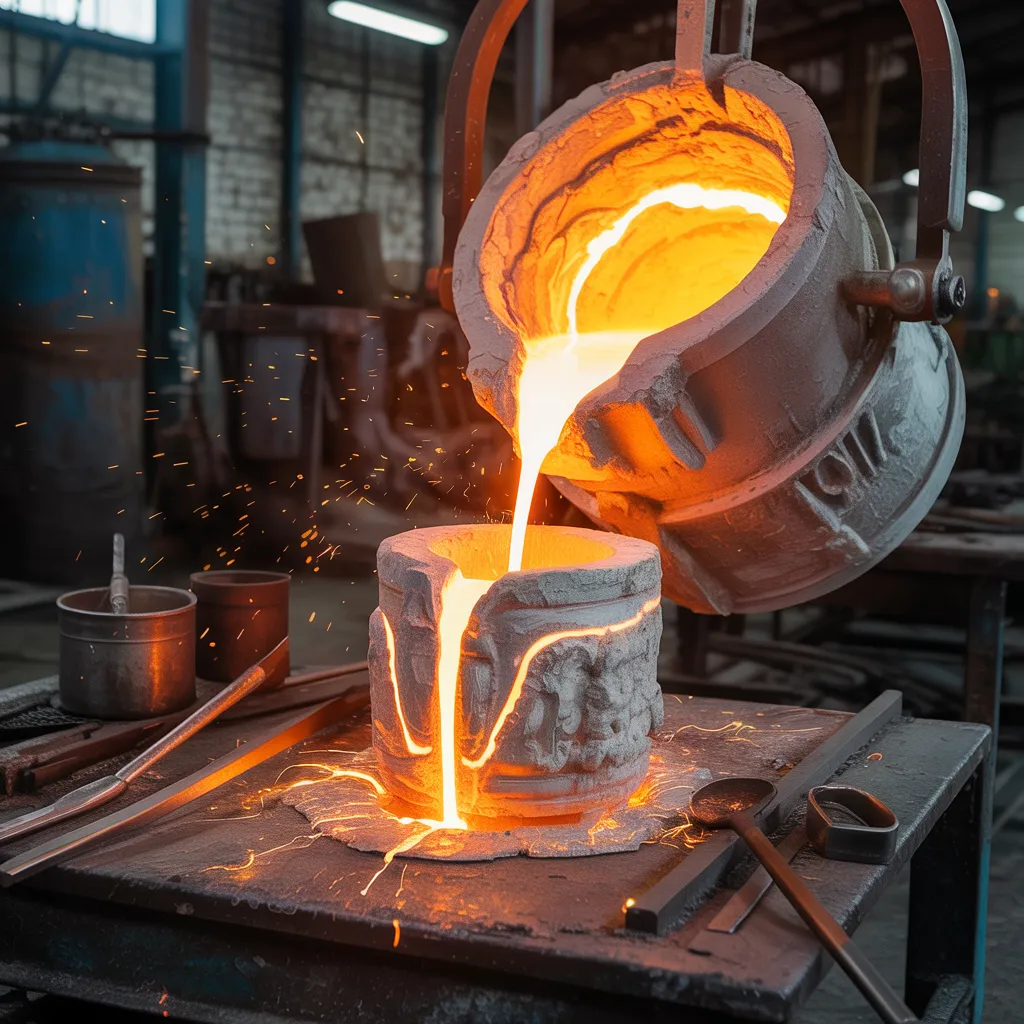
An Overview of the Metal Casting Process
Metal casting transforms liquid metal into solid shapes through various techniques. This technique commences with metal being melted, usually within a furnace, until it achieves a temperature ideal for casting. When fully molten, the metal gets poured into a prepared mold, that establishes the shape of the end product. Numerous techniques including sand casting, investment casting, and die casting are employed, with each providing distinct benefits in terms of precision and complexity.
Temperature reduction happens as the molten metal solidifies within the mold, permitting it to form the desired shape. Following the solidification process, the mold is separated from the casting, and the casting is commonly put through completion procedures like machining or surface treatment to enhance its properties. Comprehending these essential stages is critical for maximizing manufacturing output and ensuring the quality of the finished products, establishing the metal casting method an integral part of present-day manufacturing operations.
The Historical Progression of Metal Smelting Foundries
As societies progressed, the evolution of metal foundries became pivotal to industrial progress. In the beginning, ancient cultures utilized simple smelting techniques to obtain metals from natural ores, with proof of copper and bronze casting going back to 4000 BCE. The advent of iron casting circa 1200 BCE marked a significant shift, allowing for the production of stronger tools and weapons.
In the Middle Ages metalworking foundries developed considerably with the emergence of improved furnaces and molding techniques, facilitating greater manufacturing efficiency. The era of the Renaissance saw the incorporation of scientific principles into metalworking, elevating both the quality and precision of the work.
The Industrial Revolution drove the widespread growth of metal foundries, as steam power and mechanization transformed production capabilities. During the late 1800s, foundries grew indispensable to various industries, supplying essential parts for transportation, machinery, and infrastructure. This historical progression highlights the pivotal contribution of metal foundries in forming contemporary industrial landscapes.
Metal Casting Applications in Industry
Metal casting holds a significant place in various industries, notably affecting industrial processes. In the automotive sector, it is critical for producing elements that boost automotive performance and safety. Likewise, applications in the aerospace industry and construction equipment manufacturing demonstrate the flexibility and relevance of metal casting in modern production.
Automobile Parts Production
In automotive component manufacturing, metal casting plays a essential role in creating essential parts that require both strength and precision. This method facilitates the production of elaborate designs, which are indispensable in components like transmission housings, engine blocks, and suspension components. Through the use of materials such as aluminum and iron, manufacturers are able to develop sturdy yet lightweight parts that improve both vehicle performance and fuel economy. Sophisticated casting processes, including die casting and sand casting, allow for large-scale manufacturing while preserving precise tolerances. Moreover, the capability to recycle metallic waste within foundries supports sustainability efforts in the automotive industry. As automobiles advance with emerging technologies, the requirement for cutting-edge casting solutions steadily increases, underlining the significance of metal foundries in vehicle production.
Aerospace Industry Use Cases
The aerospace industry places great emphasis on metal casting to create essential parts that necessitate exceptional strength and lightweight properties. Components such as turbine blades, structural frames, and engine parts are commonly produced with advanced casting techniques. These techniques allow for detailed structures that optimize aerodynamics and performance while minimizing weight. Substances including aluminum, titanium, and superalloys are widely employed owing to their superior structural properties and high-temperature tolerance. Moreover, accurate casting techniques ensure tight tolerances, which are crucial for safety and efficiency in aerospace applications. As the industry advances, advancements in casting methods persistently enhance component performance, resulting in enhanced aircraft efficiency and dependability. This highlights the critical importance of metal foundries in supporting aerospace advancements.
Construction Machinery Components
Many pieces in construction machinery are manufactured through cast metal production, highlighting its vital role in the manufacturing landscape. Important pieces such as power unit blocks, drivetrain casings, and body framework elements leverage the accuracy and strength that casting offers. The technique supports complex geometries, which are essential for the optimal performance of heavy machinery. Moreover, cast metal materials such as high-strength iron and steel alloys supply the needed toughness to endure demanding operational environments. The ability to produce substantial amounts of elements with consistent quality greatly boosts the dependability of heavy machinery. As the need for reliable and high-performing equipment grows, the foundry manufacturing sector continues to be essential for developing construction industry advancements, ensuring that equipment meets industry standards and operational requirements.
Revolutionary Technologies Modernizing Foundry Production
As the demand for efficiency and precision in manufacturing grows, cutting-edge technologies are revolutionizing foundry production. Sophisticated automation, especially through the use of robotics, is improving the speed and precision of metal casting operations. These robotic systems can perform repetitive tasks with minimal error, reducing labor costs and improving output consistency.
Furthermore, the integration of 3D printing is revolutionizing mold fabrication, enabling rapid prototyping and advanced geometries that conventional techniques are unable to produce. This innovation not only reduces lead times but also reduces material excess.
Data analytics and the Internet of Things (IoT) are increasingly enhancing operational efficiency by supporting real-time tracking of machinery and processes. These advancements enable predictive maintenance, decreasing downtime and improving overall operational productivity.
Collectively, these innovations are reshaping the landscape of foundry production, driving manufacturers towards more efficient and precise operations in a competitive industrial environment.
Why Metal Foundries Must Prioritize Sustainability
While metal foundries have traditionally focused on production efficiency and cost-effectiveness, the growing focus on sustainability is transforming industry priorities. As global awareness of environmental issues rises, foundries are acknowledging the importance of reducing their environmental impact. This shift is driven by regulatory pressures, consumer demand for greener products, and the long-term financial benefits of sustainable practices.
Implementing energy-saving technologies and material recycling not only conserves resources but also reduces operational costs. Moreover, integrating sustainable practices improves the credibility of metal foundries, attracting partnerships and customers who prioritize environmental responsibility.
Sustainability in metal foundries also contributes to innovation; businesses are investigating alternative materials and techniques that reduce environmental impact. Ultimately, embracing sustainability is becoming essential for foundries to remain competitive in a market that increasingly values environmental stewardship alongside traditional performance metrics.
What Difficulties Are Metal Foundries Up Against Today?
Metal foundries are currently grappling with several significant challenges that affect their daily operations. Increasing energy expenses and an ongoing scarcity of qualified workers present difficulties in manufacturing processes, while stringent environmental regulations impose additional compliance burdens. Addressing these issues is essential for the industry's sustainability and competitiveness.
Increasing Energy Costs
Rising energy costs pose a significant challenge for metal foundries, influencing their production efficiency and financial viability. As energy costs continue to shift, foundries contend with growing expenditures linked to melting, casting, and finishing procedures. These increasing costs may contribute to reduced profit margins, prompting some foundries to reevaluate their pricing approaches or production practices. Moreover, the reliance on energy-demanding machinery and technology compounds the financial burden. Foundries may feel driven to adopt energy-saving measures to reduce these costs; nevertheless, these investments necessitate significant initial financial commitment. Additionally, the competitive landscape intensifies as foundries aim to maintain their market position while maneuvering through these economic pressures. As a result, controlling energy expenditures continues to be a vital concern for the long-term viability of metal foundries.
Skilled Labor Shortage
As the demand for complex metal components increases, foundries are struggling with a serious skilled labor deficit that undermines their production capacities. A large number of seasoned workers are leaving the industry, and an inadequate number of new professionals are entering the field. This deficit leads to higher labor expenses and production timeline disruptions. Foundries frequently struggle to draw in younger professionals, as the industry is perceived as less appealing compared to high-tech sectors. Furthermore, the technical expertise needed for metal casting and machining requires considerable time to cultivate, compounding the problem. Consequently, foundries may struggle to meet market demands, diminishing their market position and overall profitability. Tackling this shortage is vital for preserving development in the metal casting industry.
Environmental Regulations Compliance
Meeting environmental regulatory requirements creates substantial challenges for foundries in today's industrial environment. These facilities are increasingly pressured to minimize emissions and waste while adopting cleaner technologies. The multifaceted nature of regulations, varying by region and subject to frequent changes, introduces uncertainty and necessitates continuous adaptation. Economic limitations further hinder compliance efforts, since investments in updated equipment or processes can be considerable. Furthermore, foundries must address the challenge of guaranteeing that their employees are sufficiently trained in environmental requirements. Non-adherence can bring about significant penalties and reputational damage, highlighting the necessity for consistent monitoring and management frameworks. Maintaining a balance between operational productivity and regulatory conformity remains an essential challenge for the long-term sustainability of metal foundries.
Upcoming Innovations in Metal Foundry Technologies
The trajectory of metal foundry technologies signals significant breakthroughs that may reshape industrial production entirely. Breakthroughs like additive manufacturing are becoming increasingly prominent, enabling the development of intricate geometries while minimizing material waste. Additionally, the integration of artificial intelligence and machine learning enhances process optimization, enabling real-time monitoring and predictive maintenance.
Sustainability is also a focal point; cutting-edge recycling methods and sustainable materials are being created to reduce environmental harm. The use of 3D printing in foundries could streamline prototyping and reduce lead times, making production more agile.
Additionally, breakthroughs in robotic technology and automation seek to improve operational safety and efficiency within foundry environments. These technologies not only aim to increase productivity but also to develop safer working conditions. As these advancements develop, they will most likely bring about a more adaptive, efficient, and sustainable foundry industry, fundamentally transforming global industrial production.
Frequently Asked Questions
What Types of Metals Are Commonly Used in Foundries?
Metals frequently used in foundries consist of iron, aluminum, copper, and brass. Each metal serves specific applications, with iron proving ideal for strength, aluminum for lightweight structures, and copper for superior electrical conductivity and long-term corrosion resistance.
What Methods Do Foundries Use to Ensure Quality Control in Production?
Foundries guarantee production quality control by means of thorough examination of raw materials, ongoing oversight throughout the melting and casting processes, and enforcing rigorous compliance with industry standards, yielding premium metal products that fulfill specifications.
What Safety Measures Are Implemented in Metal Foundries?
Metal casting facilities utilize a range of safety measures, including safety equipment for personnel, ventilation systems to minimize inhalation of fumes, regular equipment maintenance, comprehensive employee safety programs, and emergency preparedness procedures to reduce hazards related to molten metal operations.
How Do Foundries Deal With Waste and Byproducts?
Foundries manage waste and secondary materials via recycling, proper disposal, and treatment methods. They adopt strategies to reduce their environmental footprint, maintaining regulatory compliance while fostering sustainability across their operations and local communities.
What Career Paths Are Available in the Metal Foundry Industry?
Job prospects in the metal foundry industry encompass roles such as metalworkers, quality control inspectors, engineers, and foundry managers. Additionally, positions in environmental management, research and development, and maintenance are available as well, ensuring diverse prospects.